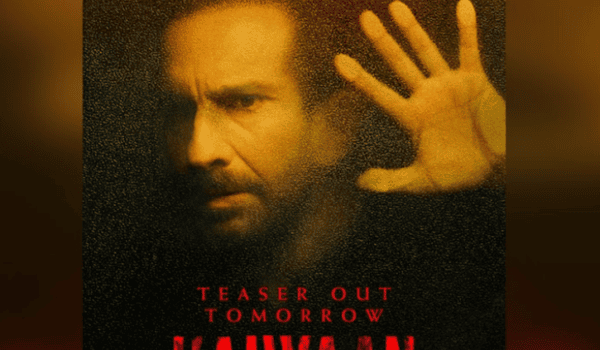
If one Tamil film has dominated conversations this year, it is DC. With its raw storytelling, rugged characters, explosive violence and Bonnie-and-Clyde-meets-cowboy aesthetic, the film has managed to feel both familiar and distinctly different.
If Mari Selvaraj’s Bison was last year’s Tamil film celebrated for its raw intensity, DC has emerged as a comparable talking point this year. Made on a reported budget of around ₹40 crore, the film has crossed the ₹100-crore mark, according to trade reports. Its box-office performance is particularly notable because acclaimed filmmaker Lokesh Kanagaraj has made his acting debut as the lead. Trade reports have also described it as the first A-rated debut film to cross ₹100 crore.
What makes the film’s performance even more interesting is its reception in Kerala.
Tamil cinema has traditionally enjoyed a strong market in the state. Films featuring Vijay, Ajith Kumar and Suriya routinely benefit from established fan bases, with early shows, celebrations and packed theatres becoming familiar sights. DC, however, does not have a conventional Tamil superstar leading it.
Lokesh Kanagaraj is undoubtedly a major name among Malayali film audiences, thanks to his work as a filmmaker. But the response to DC suggests that his popularity alone may not explain the film’s unusual performance. On several days, its Kerala collections have come close to, and occasionally exceeded, its Tamil Nadu figures.
According to Sacnilk and trade reports, the film recorded a near-100% jump in collections on its second day and maintained strong momentum during its opening run. On Day 5, August 11, DC reportedly collected ₹1.85 crore in Kerala, compared with ₹1.75 crore in Tamil Nadu.
The difference became more pronounced on Day 6, when Kerala reportedly contributed ₹2 crore against Tamil Nadu’s ₹1.65 crore. On Day 8, August 14, Kerala again edged ahead, with ₹1.08 crore compared with ₹1 crore in Tamil Nadu. Sacnilk’s reported first-week figures put Tamil Nadu at approximately ₹14.57 crore and Kerala at ₹11.60 crore.
The trend was not limited to the first week. On Day 15, Kerala reportedly collected ₹1.94 crore, slightly ahead of Tamil Nadu’s ₹1.88 crore. Similar patterns were observed on August 16, while several other days saw the two markets recording almost comparable figures.
For a Tamil film without a Vijay, Ajith or Suriya at its centre, the numbers are unusual.
Gold 101.3FM, UAE’s No. 1 radio station, brings you the latest stories and conversations from the world of cinema and entertainment.
The film’s Kerala run has naturally begun to slow as more Malayalam releases reclaim screens. Bethlehem Kudumba Unit has expanded its presence, while more theatres—particularly non-multiplexes—are gradually making room for Malayalam releases such as Thudakkam. Even so, DC continues to find audiences in Kochi and other major cities where it remains on screens.
Its staying power in urban Kerala has been particularly noticeable. Social-media discussions have even suggested that in some locations Malayali audiences appear to be turning up for the film in numbers comparable to, or greater than, Tamil audiences. While such observations are difficult to generalise, they point to the curiosity the film has generated beyond its core market.
So, what has worked for DC in Kerala?
FEUOK president Vijayakumar has pointed to the film’s music and filmmaking as important factors. The timing of its release also helped, as there were relatively fewer major Malayalam films competing for screens and audiences at the time, apart from Thudakkam, the debut of Vismaya Mohanlal, which itself performed well.
Lokesh Kanagaraj’s established popularity in Kerala is another obvious advantage. His films Kaithi, Master, Vikram and Leo have built a substantial following among Malayali audiences. His name therefore carries enough recognition to generate interest even when he moves from behind the camera to the lead role.
But DC also offers elements that have traditionally connected well with Kerala audiences: a grounded setting, a flawed protagonist, rugged characters, strong performances, stylised action and a narrative that does not depend entirely on conventional superstar charisma.
The technical and musical package adds further weight. Anirudh Ravichander’s music gives the film considerable energy, while Arun Matheswaran’s direction, Mukesh G’s cinematography and Prasanna GK’s editing contribute to its raw, kinetic visual language. Wamiqa Gabbi and the rest of the cast also add to the film’s overall appeal.
Lokesh’s performance is another interesting part of the equation. Rather than attempting to transform himself into a conventional mass hero, he embraces the character’s ruggedness and intensity. That choice appears to have worked with audiences who are already familiar with his filmmaking persona.
There may also be a broader difference between the two markets at play. Tamil Nadu has an exceptionally strong culture of star-driven theatrical releases, where established heroes can bring audiences to theatres almost by default. Kerala, while certainly receptive to Tamil stars, has also developed a reputation for responding strongly to filmmaking, performances, distinctive narratives and word of mouth.
DC appears to have landed neatly in that space.
Its Kerala performance does not mean that star power has suddenly become irrelevant. Rather, it demonstrates that a film can create its own theatrical identity when several factors—an already familiar filmmaker, distinctive filmmaking, music, action, performances and positive audience response—come together.
That may ultimately be the more interesting story behind DC: not simply that a Tamil film without a conventional superstar has performed well in Kerala, but that audiences there appear willing to embrace a film when the film itself becomes the attraction.