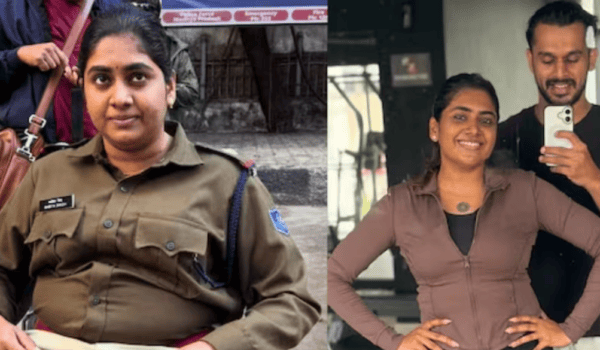
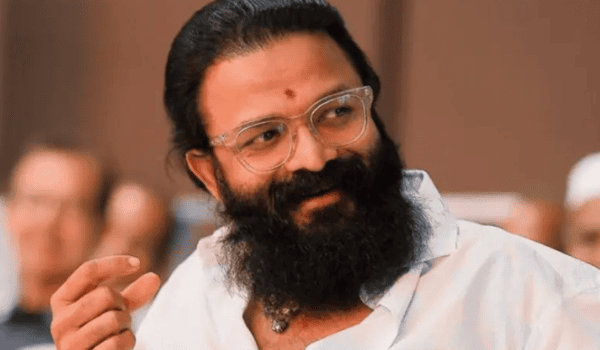
Nothing dramatic happened when actors Manju Warrier and Dileep attended the inauguration of the new Magic Frames theatre complex in Kakkanad. They were present at the same event and seated in the same row, but not beside each other. There was no visible conversation, confrontation or acknowledgement between the two.
Yet, the images and videos quickly became a story of their own. What made the moment noteworthy was not an actual interaction, but the simultaneous presence of two people whose personal history has remained deeply embedded in Kerala’s popular culture.
It would be more accurate to call it a shared public appearance than a “meeting”. But once the footage circulated, every small detail became open to interpretation. Did one notice the other? Was the distance deliberate? Was the silence uncomfortable? Or was it simply two professionals attending the same industry function?
Gold 101.3FM, UAE’s No. 1 radio station, brings you stories and conversations from the world of Malayalam cinema, keeping listeners connected to the latest developments in the industry.
The fascination cannot be explained by celebrity curiosity alone. Malayalis watched Manju Warrier and Dileep first as a popular screen pair, then as a married couple, and eventually as two individuals who went their separate ways. Over time, their relationship became part of a larger public narrative in which audiences often felt they knew the people behind the stars.
Manju Warrier’s return to cinema after a long absence added another dimension to that narrative. Her comeback was widely perceived not simply as the return of an actor, but as the rebuilding of an independent professional identity. Her subsequent success strengthened the image of a woman reclaiming space in both cinema and public life.
Dileep’s public journey has taken a markedly different path. His long-standing position in Malayalam cinema was followed by intense scrutiny after the 2017 actor abduction and sexual assault case. In December 2025, the Ernakulam Principal Sessions Court acquitted Dileep, holding that the prosecution had failed to establish the alleged conspiracy against him. Six other accused were convicted in connection with the crime.
The legal story, however, did not end with the trial court verdict. In June 2026, the Kerala High Court admitted the State’s appeal challenging Dileep’s acquittal, along with appeals concerning the convictions and sentences of others involved in the case. The matter therefore remains subject to further judicial consideration.
Manju Warrier’s own connection to the case as a witness makes any public appearance involving the former couple particularly sensitive. That context inevitably adds weight to what might otherwise have been an ordinary industry event.
But this is precisely where the limits of public fascination become important. Audiences develop parasocial relationships with actors—an emotional sense of familiarity created through years of watching their films, interviews, relationships and public appearances. In the case of Manju Warrier and Dileep, that feeling is unusually strong because the public witnessed so many chapters of their story.
There is also an expectation that complicated stories should have cinematic endings. Films offer confrontation, reconciliation, explanation and closure. Real life rarely does.
Two people can occupy the same room without speaking. They can choose different seats without either choice carrying a dramatic meaning. Silence can indicate discomfort, courtesy, indifference or simply a decision to maintain personal boundaries. A short video cannot reliably reveal which one it is.
That uncertainty, however, creates space for audiences to fill in the blanks. A glance can be interpreted as forgiveness; the absence of one can be read as hostility. A few empty seats can suddenly become a symbol of everything people believe happened between two people.
Perhaps that is what the viral footage ultimately tells us—not necessarily something about Manju Warrier or Dileep, but something about the audience watching them.
Into the space between the two actors, people project their own ideas about marriage, independence, power, justice, forgiveness and closure. The same image can therefore mean very different things to different viewers.
The simplest reading may also be the fairest: two people with a complicated and highly public past attended the same industry event and continued with their separate lives.
The unanswered questions may belong less to them than to an audience still looking for an ending that real life has never promised.